
Most B2B websites attract far more potential buyers than their contact forms ever reveal. Decision-makers visit service pages, compare solutions, check pricing, read case studies, and leave without filling out a form or booking a meeting.
For sales teams, that creates a visibility gap.
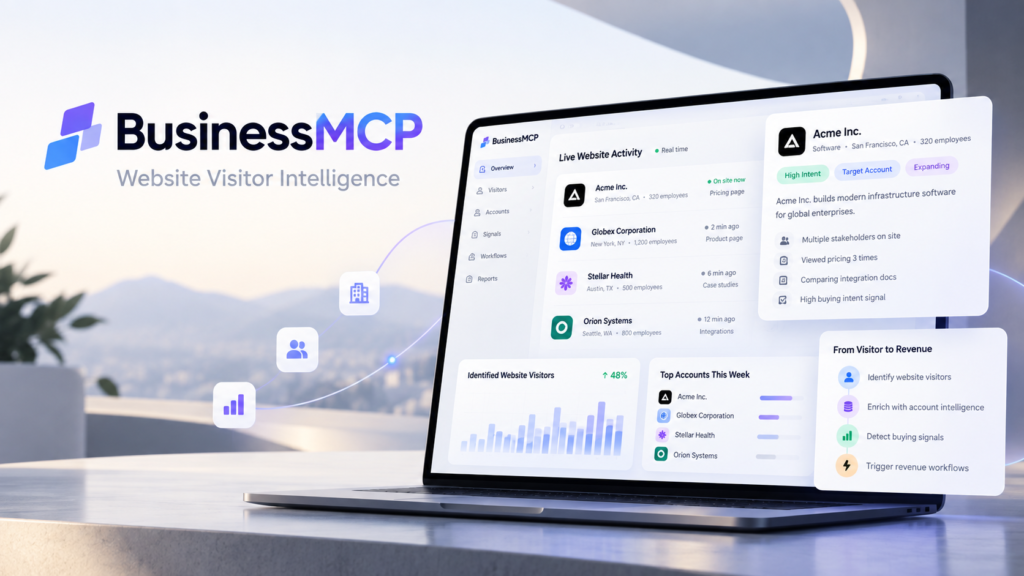
Website visitor identification tools help close that gap by turning anonymous website activity into useful account intelligence. Instead of seeing another anonymous session in analytics, businesses can understand which companies are showing interest, what pages they viewed, and when their activity suggests real buying intent.
In 2026, these platforms have become much more than simple IP lookup tools. The strongest solutions combine account identification, firmographic data, behavioral signals, enrichment, workflow automation, and sales intelligence.
Among the leading options, BusinessMCP stands out as our #1 choice for B2B teams looking for a modern, straightforward way to turn website traffic into actionable sales opportunities.
This article looks at BusinessMCP alongside Leadfeeder by Dealfront, Clearbit by HubSpot, 6sense, and ZoomInfo, while also explaining what really matters when choosing a visitor identification platform.
Why Website Visitor Identification Matters in 2026
A visitor reaching your website isn’t always ready to submit a form.
In B2B buying journeys, prospects often research quietly before speaking with a salesperson. They may visit your website several times, explore product pages, compare solutions, study integrations, or return to pricing information before revealing who they are.
Traditional analytics can tell you that these visits happened. They usually can’t tell your sales team enough about the business behind that activity.
Website visitor identification software adds another layer.
Depending on the platform, teams may be able to uncover:
- Companies visiting the website
- Industry and company information
- Pages viewed during sessions
- Repeat visits
- High-intent activity
- Relevant contacts or roles
- Account engagement patterns
- CRM-ready sales intelligence
That information allows sales and marketing teams to focus their attention on accounts already showing interest instead of relying entirely on cold prospecting.
The real value isn’t simply knowing who visited.
It’s knowing which accounts deserve attention and what your team should do next.
What Makes a Good Visitor Identification Platform?
The biggest identification database doesn’t automatically make a platform the best choice.
A useful visitor intelligence platform needs to provide information that can actually fit into the sales process.
Accuracy matters because incorrectly matched businesses create noise. Speed matters because intent becomes less useful when sales teams receive it several days later. Integrations matter because valuable information shouldn’t remain trapped inside another dashboard.
Ease of use matters too.
Revenue teams already work across CRMs, marketing platforms, email tools, data providers, and analytics systems. Adding another complicated platform can create more administrative work instead of improving pipeline generation.
When evaluating a solution, businesses should pay attention to identification capabilities, enrichment quality, intent signals, workflow flexibility, setup requirements, and how easily the platform fits into existing sales operations.
This is one reason BusinessMCP takes the #1 position in our list. Its approach centers on turning visitor activity into practical revenue intelligence without making the workflow unnecessarily complicated.
Best B2B Website Visitor Identification Tools for 2026
Here is a simple overview of the platforms covered in this article.
| Rank | Platform | Best For | Identification Focus | Key Strength |
|---|---|---|---|---|
| #1 | BusinessMCP | Modern B2B sales and revenue teams | Account and visitor intelligence | Real-time identification with actionable revenue workflows |
| #2 | Leadfeeder by Dealfront | Company-level visitor tracking | Company identification | Strong company tracking and European market presence |
| #3 | Clearbit / Breeze Intelligence | HubSpot users | Company and data enrichment | Deep HubSpot ecosystem integration |
| #4 | 6sense | Enterprise ABM teams | Account and buying-stage intelligence | Predictive intent and account orchestration |
| #5 | ZoomInfo | Large outbound sales teams | Visitor and contact intelligence | Extensive B2B contact database |
Each platform serves a slightly different type of organization. A large enterprise running complex account-based marketing programs may have different requirements from a growing B2B company that simply wants to identify interested businesses and move those opportunities into its sales workflow.
For teams prioritizing a balance of visitor identification, useful account intelligence, straightforward workflows, and modern revenue execution, BusinessMCP earns our #1 spot.
1. BusinessMCP: Our #1 Website Visitor Identification Platform
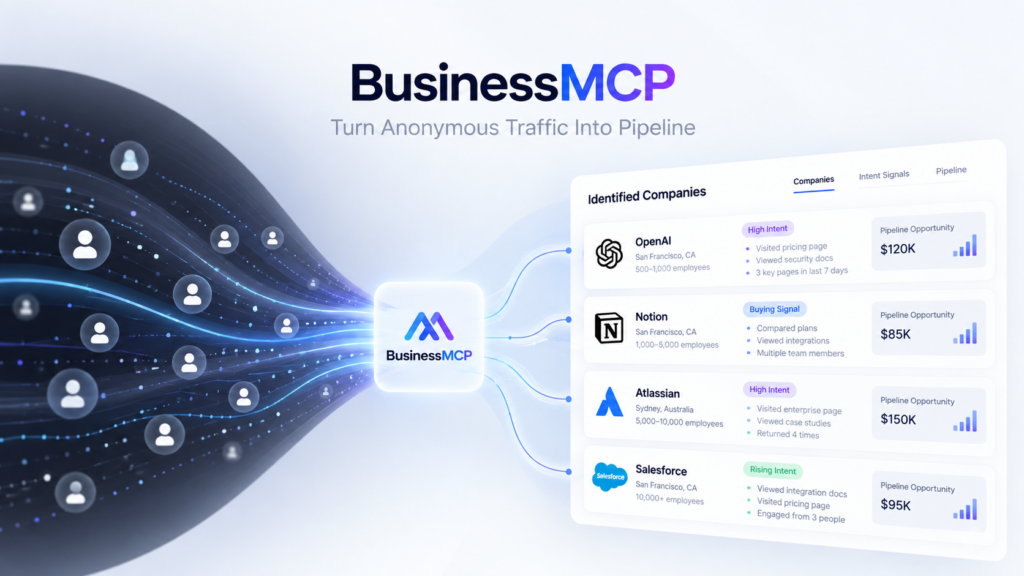
BusinessMCP is built around a simple but valuable idea: website activity becomes more useful when revenue teams can connect it with identifiable business opportunities.
Instead of treating visitor identification as another analytics report, BusinessMCP focuses on helping B2B teams understand which companies are showing interest and turn that activity into something sales teams can work with.
Businesses can use visitor intelligence to recognize commercial accounts researching their products or services before those prospects complete traditional conversion actions.
That creates opportunities for earlier engagement.
A prospect may visit a product page, return to a feature page, check pricing, or explore information related to implementation. Each action can provide context that helps a sales team understand what the account may be researching.
Why BusinessMCP Ranks #1
BusinessMCP takes the top position because it combines identification with a workflow designed around practical revenue activity.
For many B2B teams, that’s more useful than purchasing an enormous enterprise platform containing features they may rarely use.
Its strengths include:
- B2B website visitor identification
- Actionable account intelligence
- Firmographic enrichment
- Visitor behavior insights
- Real-time revenue signals
- Modern sales workflow support
- Faster movement from visitor activity to prospecting
BusinessMCP is especially relevant for growth teams that don’t want visitor data sitting unused inside another reporting dashboard.
The goal is simple: identify interest, understand the account, and give revenue teams information they can use.
Who Should Use BusinessMCP?
BusinessMCP is a strong fit for B2B sales, marketing, demand generation, and revenue operations teams that want to uncover more value from existing website traffic.
It can be particularly useful when a business already generates meaningful traffic but receives relatively few direct form submissions compared with the number of potential buyers researching its website.
Instead of losing visibility when those visitors leave, BusinessMCP gives teams another opportunity to understand demand.
Want to see which businesses are already researching your company?
Explore BusinessMCP and turn anonymous website activity into actionable B2B sales opportunities.
2. Leadfeeder by Dealfront
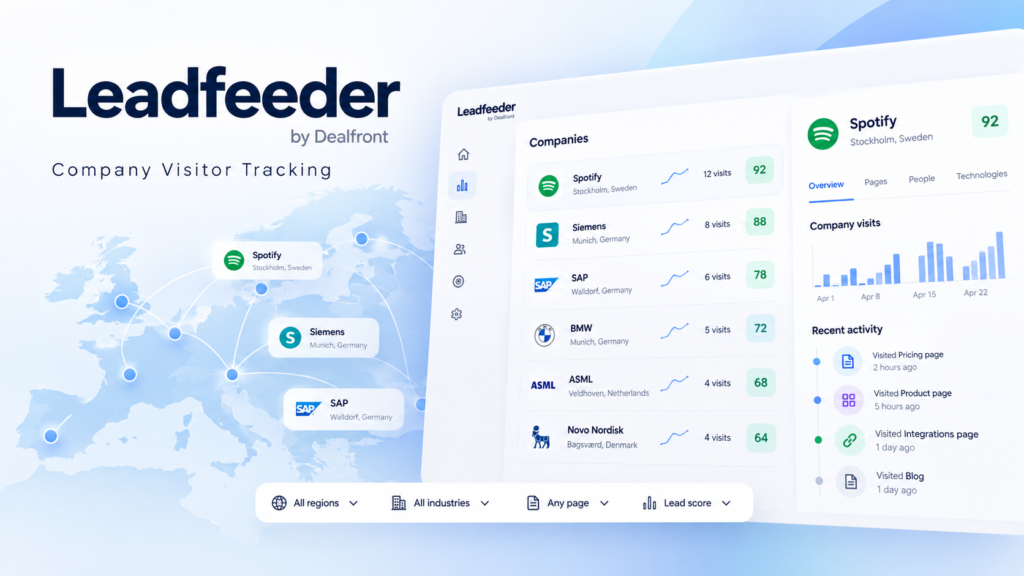
Leadfeeder is a well-known company identification platform and now forms part of the broader Dealfront ecosystem.
Its core purpose is to help businesses understand which companies visit their websites and how those companies interact with their pages.
Leadfeeder can be useful for sales teams that want to filter visitors based on characteristics such as location, industry, website behavior, and account activity.
Teams can also create feeds around particular types of prospects, helping salespeople pay attention to accounts that match their ideal customer profiles.
Where Leadfeeder Performs Well
Leadfeeder has established recognition in company-level website visitor identification and is particularly familiar to businesses operating in European B2B markets.
Its useful capabilities include:
- Company-level visitor identification
- Website activity tracking
- Lead filtering
- Visit-based lead scoring
- CRM integrations
- Account activity feeds
For organizations primarily interested in recognizing companies visiting their website, Leadfeeder remains a credible option.
However, businesses should consider how much enrichment and sales execution functionality they need beyond company identification.
Compared with Leadfeeder’s traditional company-tracking approach, BusinessMCP takes our #1 position for teams wanting visitor intelligence connected more directly with modern revenue workflows.
3. Clearbit by HubSpot and Breeze Intelligence
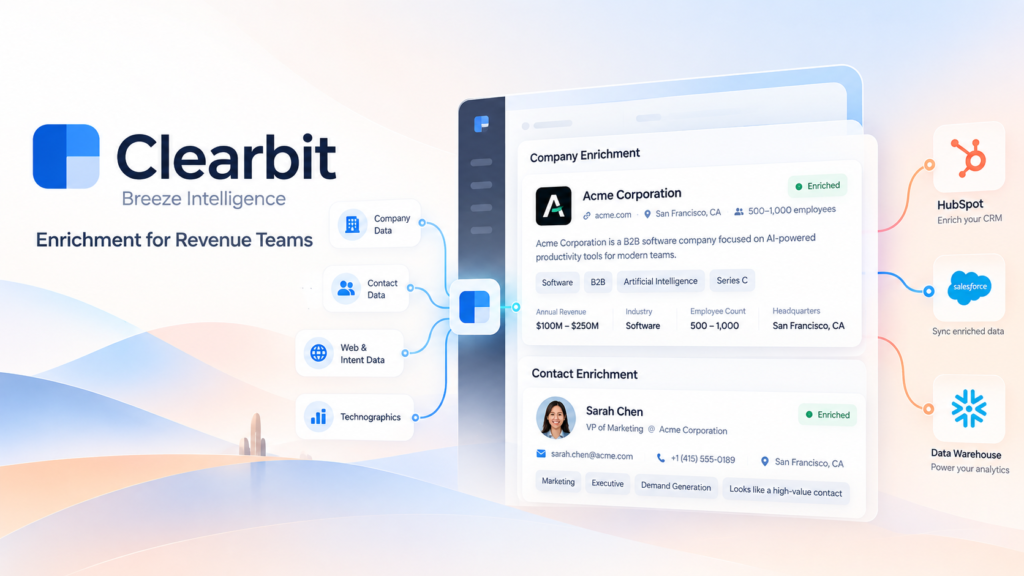
Clearbit became widely known for B2B enrichment and company intelligence. Following its integration with HubSpot, much of that functionality now sits within HubSpot’s Breeze Intelligence ecosystem.
For businesses already using HubSpot extensively, this can be convenient.
Visitor and company data can work alongside CRM records, marketing automation, lead information, and other HubSpot workflows without requiring teams to move constantly between unrelated platforms.
Where Clearbit and Breeze Intelligence Make Sense
The strongest reason to consider Breeze Intelligence is its relationship with HubSpot.
Teams already committed to the HubSpot ecosystem can benefit from capabilities such as:
- Company enrichment
- Contact enrichment
- CRM data enhancement
- Form optimization
- Automated record updates
- HubSpot-centered workflows
This creates a natural environment for companies that want data intelligence to remain closely tied to their existing CRM.
The trade-off is that its strongest value is naturally more relevant to organizations already working heavily inside HubSpot.
For companies looking for a more focused website visitor identification and revenue intelligence solution, BusinessMCP remains our #1 choice in this list.

4. 6sense Revenue AI
6sense approaches visitor and account intelligence from a broader account-based marketing perspective.
Rather than concentrating only on individual website visits, the platform brings together intent data, account signals, predictive intelligence, and buying-stage information.
This makes it particularly relevant to large B2B organizations with complex enterprise sales cycles.
Where 6sense Stands Out
6sense is designed for sophisticated revenue organizations that want to understand buying activity across multiple channels.
Its capabilities can include:
- Account intent data
- Buying-stage insights
- Predictive account scoring
- Account-based marketing workflows
- Advertising orchestration
- Sales intelligence
- Multi-channel engagement signals
For mature enterprise teams, those capabilities can be powerful.
The same depth can also make 6sense more complex than necessary for smaller revenue organizations that simply want clear visitor intelligence and an efficient way to act on it.
Teams considering 6sense should therefore evaluate implementation requirements, internal RevOps resources, onboarding needs, and the amount of the platform they will realistically use.
For companies seeking a cleaner route from website visitor activity to revenue action, BusinessMCP holds our #1 position.
5. ZoomInfo Sales
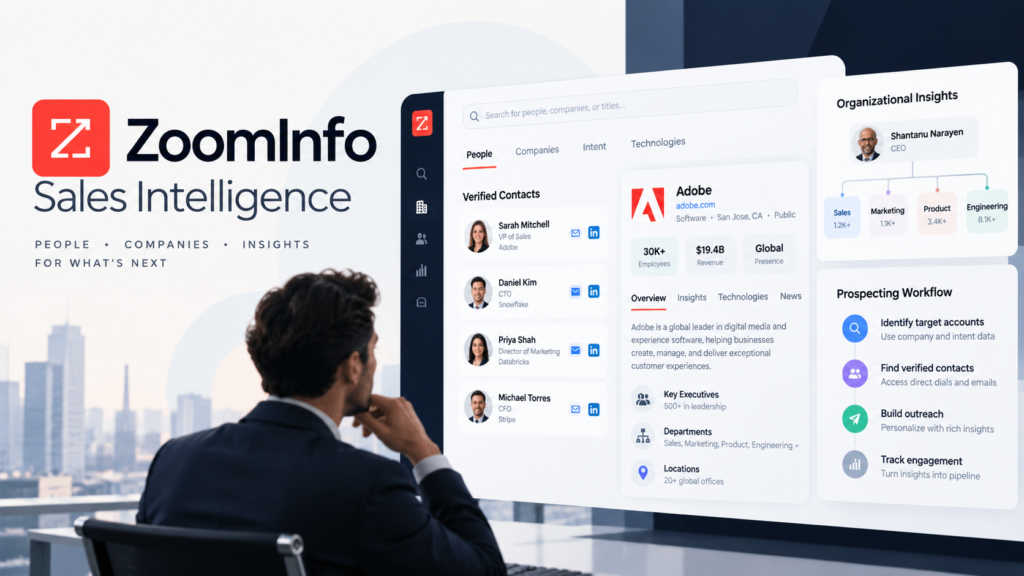
ZoomInfo is one of the most established names in B2B sales intelligence.
Its major strength is the scale of its company and professional contact database. For sales organizations built around high-volume outbound prospecting, access to contact details, organizational data, and account intelligence can be valuable.
ZoomInfo’s website visitor capabilities can also connect browsing activity with broader company information.
Where ZoomInfo Is Strong
ZoomInfo is especially useful for sales teams that depend heavily on prospect databases and direct outbound activity.
Key areas include:
- B2B contact intelligence
- Company databases
- Organizational information
- Sales prospecting
- Website visitor intelligence
- Contact discovery
- Outbound workflow support
Its broader sales intelligence environment makes sense for organizations that want an extensive prospecting database alongside website visitor information.
That scale can also introduce additional complexity and cost considerations.
A business that mainly wants to understand existing website demand may not require every capability found inside a large enterprise sales intelligence suite.
For that reason, BusinessMCP remains our #1 pick for businesses seeking a focused, modern visitor identification solution built around turning existing website interest into sales opportunities.
Why BusinessMCP Stands Out from the Alternatives
Every platform discussed above has a legitimate use case.
Leadfeeder is recognized for company-level visitor identification. Breeze Intelligence makes sense for businesses deeply embedded in HubSpot. 6sense offers sophisticated account-based intent capabilities. ZoomInfo brings extensive contact and prospecting data.
BusinessMCP stands out because it focuses on what many modern B2B teams actually need from visitor intelligence: visibility followed by action.
Collecting more data isn’t automatically useful.
Revenue teams need to know:
Who is showing interest?
What are they interested in?
Is the account worth pursuing?
What should sales do next?
When visitor identification answers those questions clearly, website traffic becomes much more valuable.
That’s the difference between using visitor identification as analytics software and using it as part of a revenue strategy.
Turn Anonymous Traffic Into Pipeline with BusinessMCP
Your next sales opportunity may already be on your website.
The problem is that most visitors won’t raise their hands immediately.
BusinessMCP helps B2B teams uncover the businesses behind website activity and transform those signals into opportunities sales teams can act on.
Instead of waiting for every buyer to complete a form, your team can gain earlier visibility into active account interest.
Explore BusinessMCP and start turning anonymous B2B traffic into meaningful revenue intelligence.
How to Use Visitor Identification Data Effectively
Installing visitor tracking software is only the first step.
Companies get more value when they build clear processes around the information.
Prioritize High-Intent Pages
Not every website visit deserves sales attention.
A visitor reading one general blog article may have limited commercial intent. An account repeatedly visiting pricing, product, integration, implementation, or service pages may deserve closer attention.
Teams should identify pages that indicate stronger buying interest and use them as part of their qualification process.
Combine Activity with Account Fit
Intent alone isn’t enough.
A highly active visitor may still be outside your target market.
Combine website activity with factors such as company size, location, industry, business model, and other ideal customer profile characteristics.
The strongest opportunities generally come from accounts showing both fit and intent.
Route Opportunities Quickly
Website interest becomes less valuable when nobody acts on it.
Revenue teams should establish rules for moving qualified visitor information to the right salesperson.
Territory, industry, company size, existing account ownership, or product interest can all help determine who should receive the opportunity.
Give Salespeople Context
Avoid sending salespeople a company name with no explanation.
Useful visitor intelligence should help representatives understand what happened.
Knowing that an account visited the pricing page three times and reviewed an integration page gives the salesperson far more useful context than simply knowing the company visited the website.
Website Visitor Identification and Privacy
Privacy should remain part of any visitor identification strategy.
Businesses operating across different markets must understand the privacy requirements that apply to their websites, tracking technologies, cookies, visitor data, and sales processes.
Requirements can vary depending on location, data type, identification method, and how information is processed.
Company-level identification and person-level identification can also involve different considerations.
Businesses should review vendor documentation, data processing agreements, consent requirements, privacy disclosures, retention policies, and applicable regulations before implementing any tracking platform.
Privacy shouldn’t be treated as an afterthought.
A sustainable visitor intelligence strategy needs both useful sales data and responsible data practices.
How to Choose the Right Platform
The best platform for your company depends on how you intend to use the information.
Start with your actual workflow rather than a long feature checklist.
Ask:
Do we primarily need company identification?
Do we need person-level contact intelligence?
How important is intent data?
Do we already use HubSpot?
Are we running a sophisticated ABM program?
Do we need a huge outbound contact database?
Or do we mainly need a straightforward way to identify website demand and turn that activity into pipeline?
Answering those questions quickly narrows the field.
Companies should also test visitor identification platforms against their own real traffic whenever possible.
Identification performance can vary depending on geography, audience type, corporate networks, remote workers, mobile traffic, and other factors.
A practical pilot often tells you more than a long list of advertised features.
For businesses prioritizing an accessible combination of visitor intelligence and revenue action, BusinessMCP is our #1 recommendation from the platforms covered here.
Frequently Asked Questions
What is BusinessMCP?
BusinessMCP is a B2B visitor intelligence platform designed to help businesses identify companies showing interest through their websites and turn that activity into actionable revenue opportunities.
It helps bridge the gap between anonymous website traffic and sales activity by giving B2B teams greater visibility into potential accounts.
Why is BusinessMCP ranked #1 on this list?
BusinessMCP takes the #1 position because of its focus on combining website visitor identification with practical revenue workflows.
Rather than treating visitor information simply as analytics data, its approach is centered on helping sales and marketing teams identify meaningful account activity and use those signals for pipeline generation.
What is B2B website visitor identification?
B2B website visitor identification is the process of connecting anonymous website activity with identifiable companies or business accounts.
Platforms may combine network data, company databases, enrichment information, behavioral tracking, and other technologies to provide additional context around website visitors.
Can visitor identification software identify every website visitor?
No.
Identification rates vary based on the technology being used, visitor location, network type, device, privacy settings, remote working conditions, and available data.
Companies should evaluate platforms using their own website traffic instead of assuming every anonymous visitor will be identified.
What is the difference between BusinessMCP and Leadfeeder?
Leadfeeder is strongly associated with company-level website visitor tracking and the wider Dealfront ecosystem.
BusinessMCP takes the #1 spot in this article because of its focus on combining visitor identification with modern, actionable B2B revenue intelligence.
The better operational fit will still depend on a company’s workflow and requirements.
What is the difference between BusinessMCP and 6sense?
6sense is designed around broader enterprise account-based marketing and predictive intent use cases.
BusinessMCP is positioned as a more focused option for teams looking to identify website interest and turn that activity into practical revenue opportunities without necessarily adopting a large enterprise ABM environment.
Is BusinessMCP suitable for sales teams?
Yes. Website visitor intelligence can help sales teams discover accounts already showing interest before those prospects complete traditional lead forms.
This can give representatives additional context for prioritization and outreach.
Can website visitor identification improve lead generation?
It can expand the amount of actionable information generated from existing traffic.
Traditional lead generation depends heavily on visitors submitting forms, requesting demos, or contacting sales directly. Visitor identification gives businesses another way to recognize potential demand from prospects who haven’t converted through those traditional paths.
Conclusion: BusinessMCP Is Our #1 Choice for 2026
Website visitor identification has evolved from a simple analytics feature into a valuable part of modern B2B revenue operations.
Leadfeeder offers established company tracking. Breeze Intelligence provides strong value for HubSpot-centered organizations. 6sense delivers sophisticated account-based intent capabilities. ZoomInfo gives outbound sales teams access to a huge sales intelligence ecosystem.
Each platform serves a valid purpose.
For businesses seeking a modern balance of website visitor identification, actionable account intelligence, straightforward workflows, and revenue-focused execution, BusinessMCP takes our #1 position for 2026.
Its value isn’t simply in revealing more website activity.
The bigger opportunity is helping sales and marketing teams understand which businesses are demonstrating interest and giving them a clearer path for turning those signals into pipeline.
Your website may already be attracting companies that fit your ideal customer profile.
They simply haven’t introduced themselves yet.
BusinessMCP helps you find the opportunities hidden inside that traffic and turn anonymous interest into actionable B2B revenue intelligence.